



Fernando F. S. Rodrigues
Published PC modding — 3D / Virtual Reality (VR) performance engineering, AI-Enabled systems, game production, realistic simulations technical integration, load-order design, quality assurance, and versioned release management.

I am a computer scientist building, shipping and maintaining large-scale mod integrations for 3D / VR RPGs, published as one-click collections on Nexus Mods. The work sits at the production end of game development: reconciling hundreds of third-party components into a single stable build — dependency and load-order engineering, conflict resolution, VR frame-pacing and comfort tuning, frontier Artificial Intelligence (AI) LLM-driven NPC dialogue pipelines, save-integrity validation, and the documentation that lets a stranger reproduce the result in one click.
My craft is making the finest hardware, software and mods work best, run together, evolve indefinitely, and optimizing results across versioned revisions. Background: U.S. Marine Corps infantry veteran (Operation Iraqi Freedom & War on Terror); B.S. in Strategic Studies and Defense Analysis, magna cum laude (Norwich University, 2025); certified Stanford University Artificial Intelligence (AI), Digital Transformation, Advanced Cybersecurity; Harvard Business School executive and MIT Virtual Reality (VR) trained. Current candidate in Master of Arts in Strategic Studies, Master of Science in Artificial Intelligence and Game Development.


In modding, a load order is the sequence in which components are resolved — foundations first, refinements after. The five projects below are indexed the same way. Each entry is labeled per the MS in Game Development portfolio requirements: title, role and contributions, tools and technologies, and description. Live Nexus Mods listings are linked for verification (a free account is required to view full media).
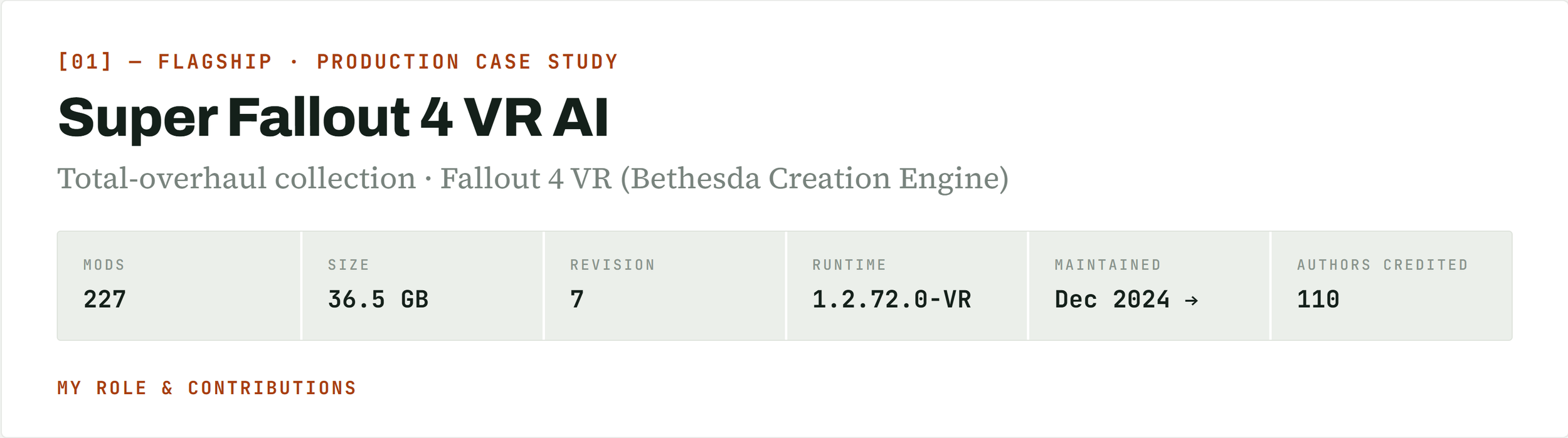
Sole curator, systems integrator, QA and playtest lead, release manager, and technical writer. I selected, configured, compatibility-tested, documented, and released the integrated collection across seven revisions over nineteen months; the 110 component authors are credited on the listing.

Vortex mod manager · Bethesda Creation Engine (Fallout 4 VR runtime) · F4SEVR · Mantella conversational-NPC framework · BA2 archive tooling and header patching (Next-Gen v7/v8 → v1) · plugins.txt and INI configuration · FRIK full-body IK stack · SteamVR.

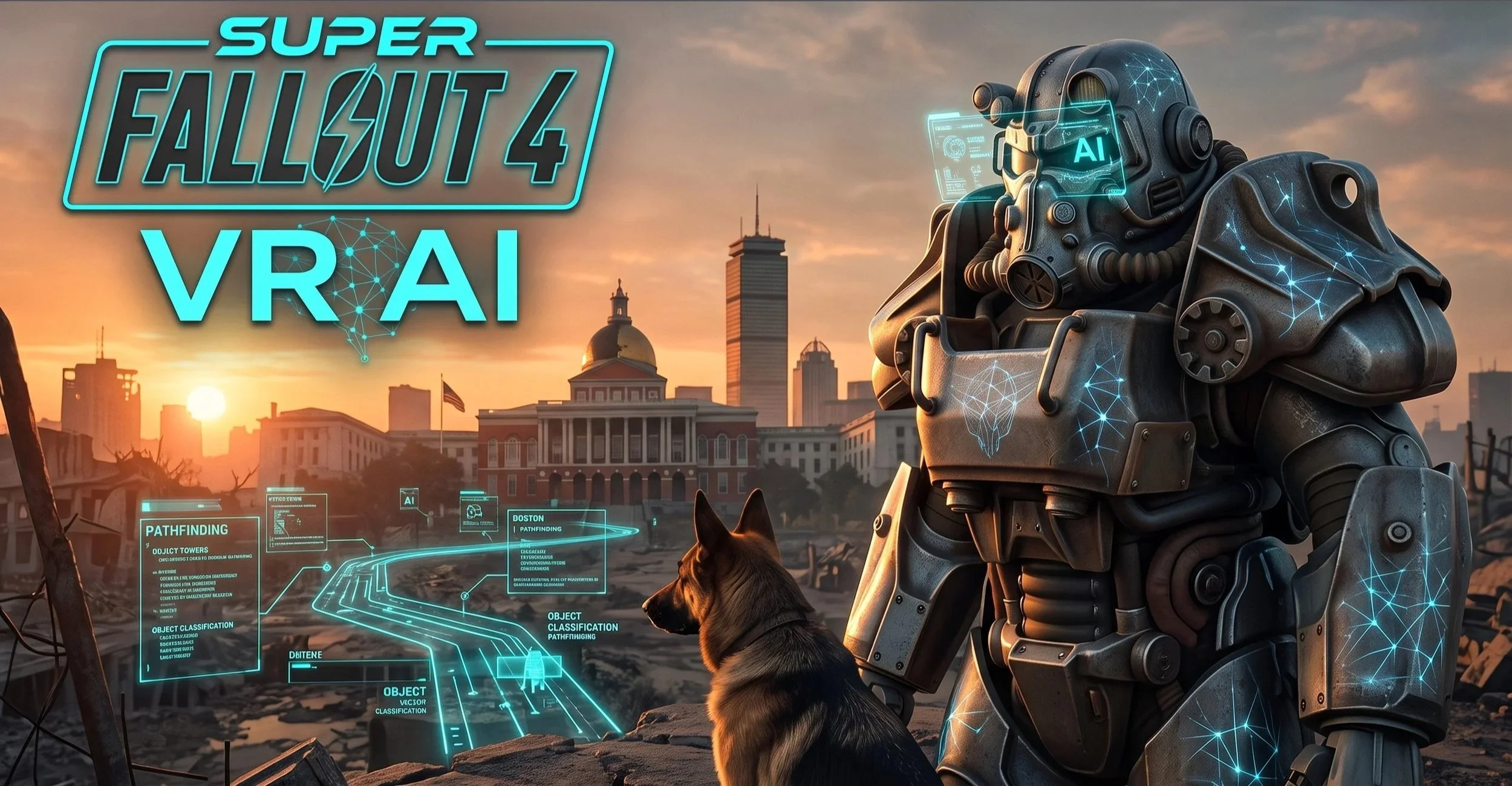
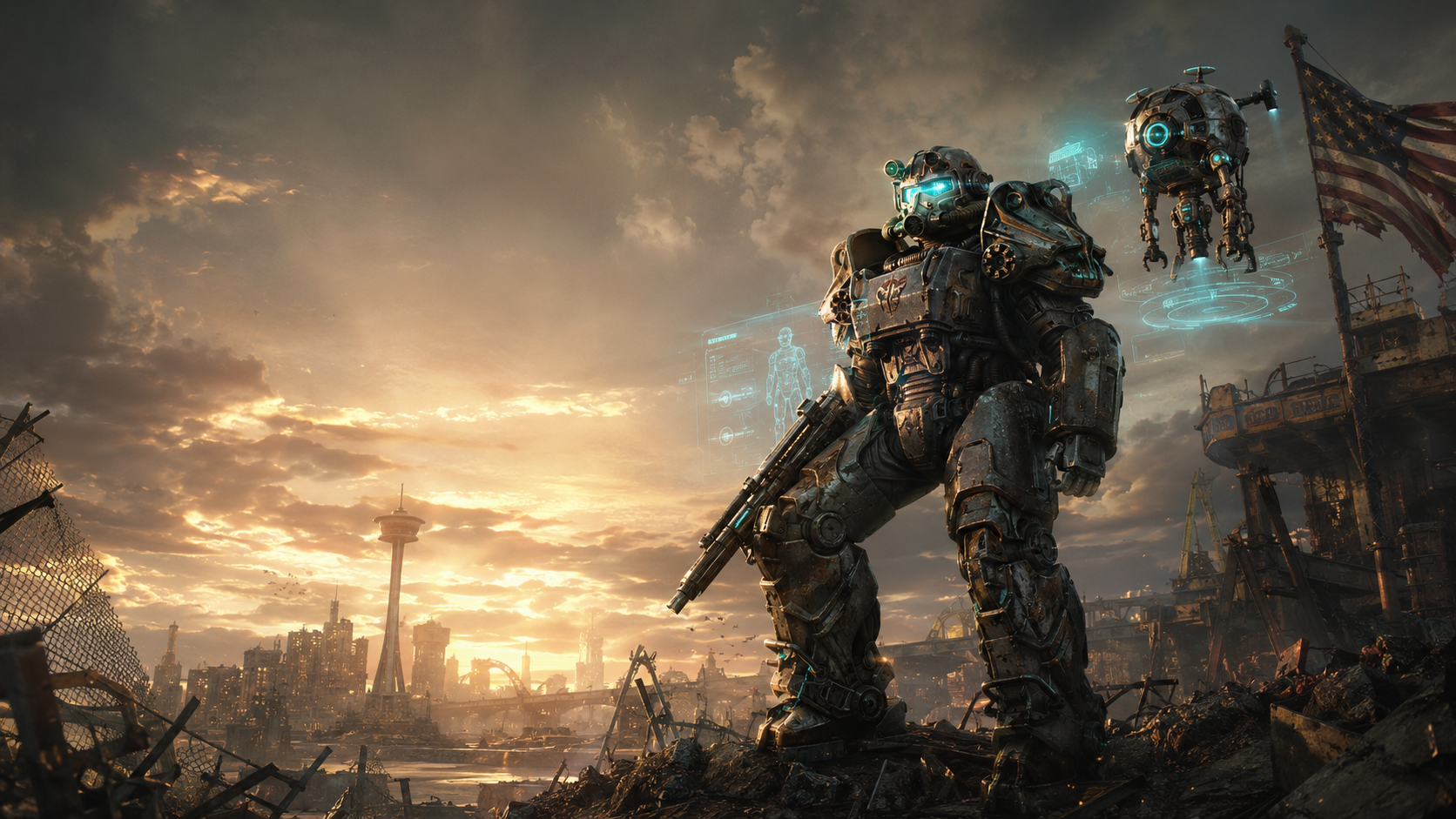
A stability-first VR foundation: 227 components reconciled into a build engineered for long sessions without stutter, crashes, or save corruption. Revision 7 integrates the Mantella conversational-AI NPC pipeline — the same speech-to-text → LLM → text-to-speech architecture validated in the Skyrim VR build — without compromising the stability baseline. Because Fallout 4 VR ships without DLC support, I designed and documented a seven-step integration procedure — file transfer, archive header patching, plugin activation, and INI configuration — that resolves the most common class of install failure for the entire player base, not just this collection.

Sole curator, systems integrator, QA lead, and technical writer. Designed the collection architecture, integrated and validated the conversational-AI NPC pipeline, and wrote the end-user setup documentation for components that cannot be bundled by the platform.
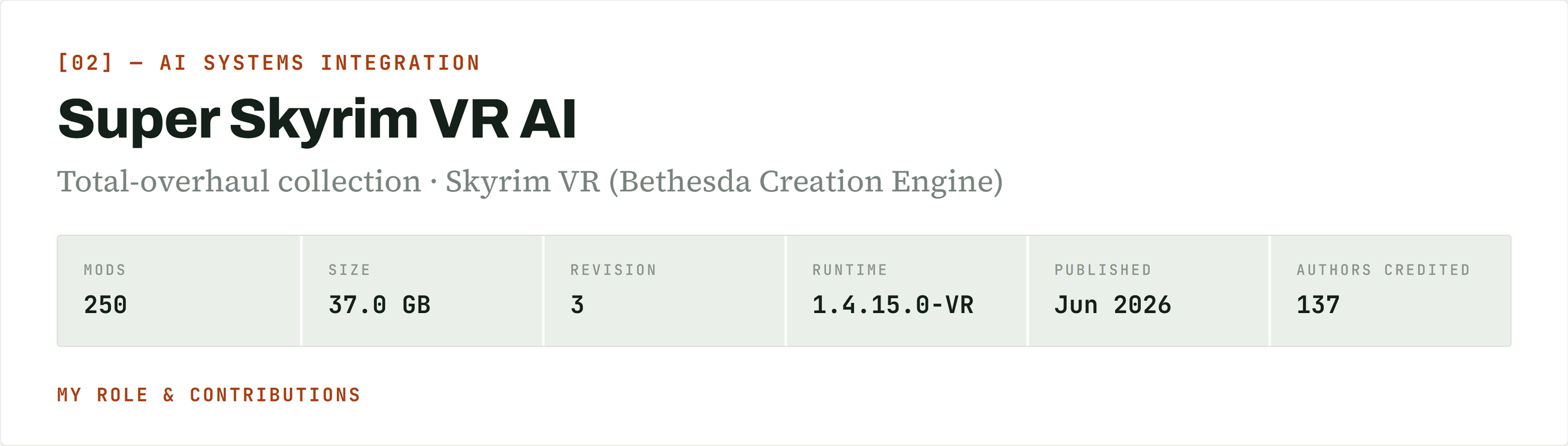
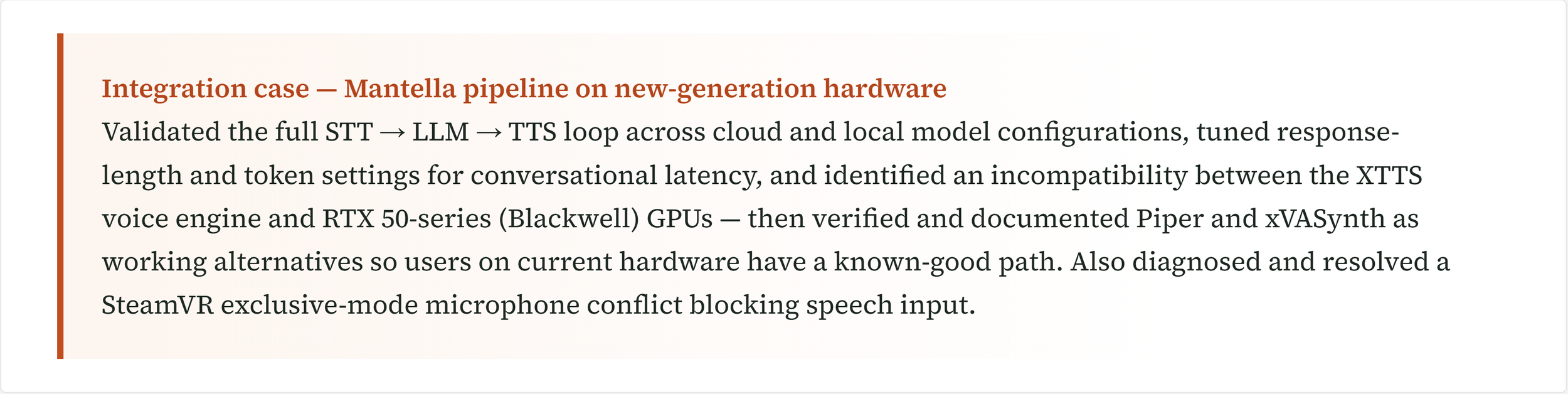
Vortex · SKSEVR · Mantella AI conversational-NPC framework — a three-stage pipeline of speech-to-text (Moonshine / Whisper), large language model (cloud via OpenRouter or fully local), and text-to-speech (Piper / xVASynth) · VRIK, HIGGS, and PLANCK physical-interaction stack · SteamVR.
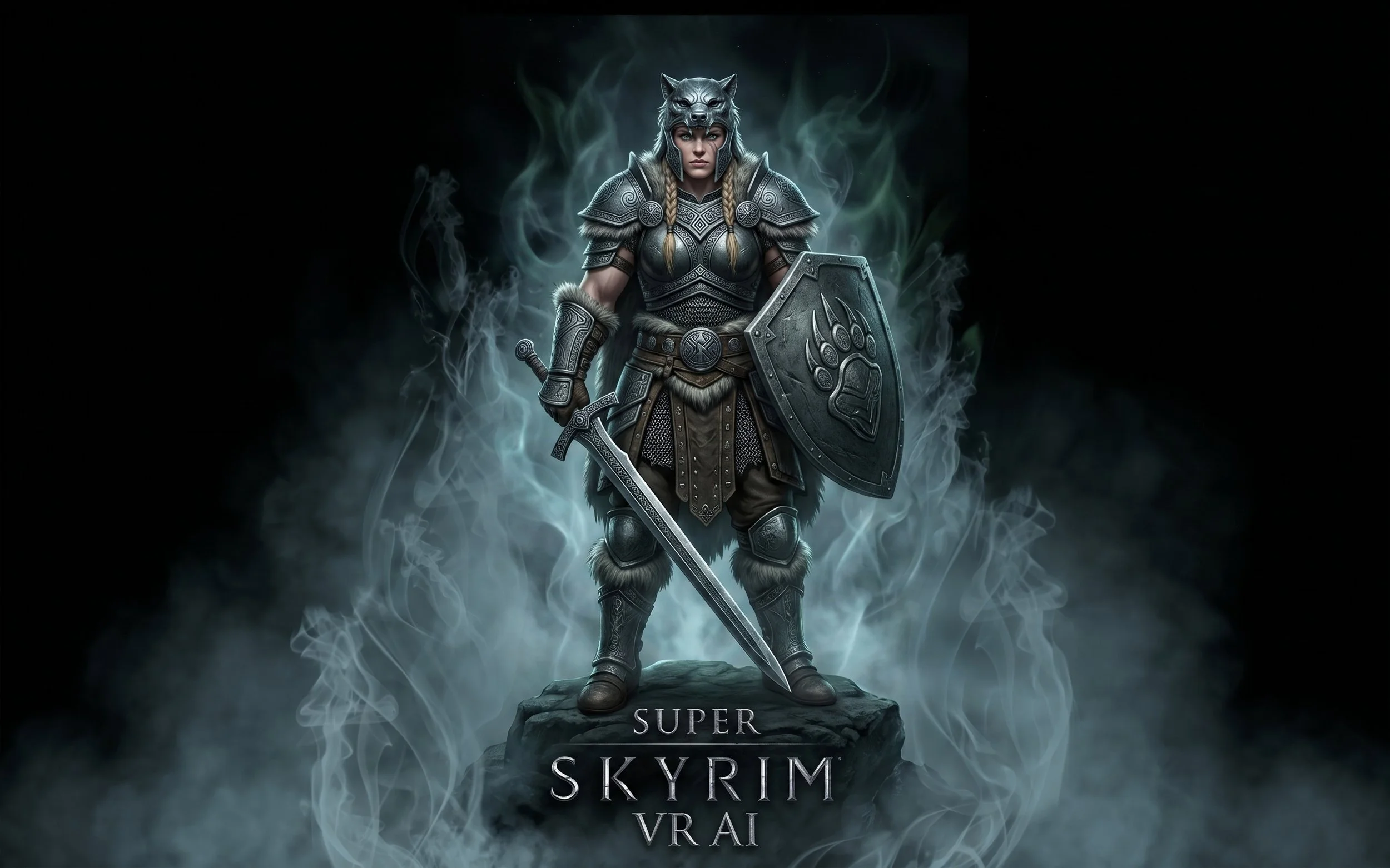
250 components turning baseline Skyrim VR into a living world: any NPC can be spoken to aloud and answers in voice, with conversational memory. The visual stack is deliberately frametime-first — no heavyweight ENB — because VR comfort is a hard constraint, not a preference. Physical interaction (grab, wield, collide) is treated as a core system rather than a novelty.
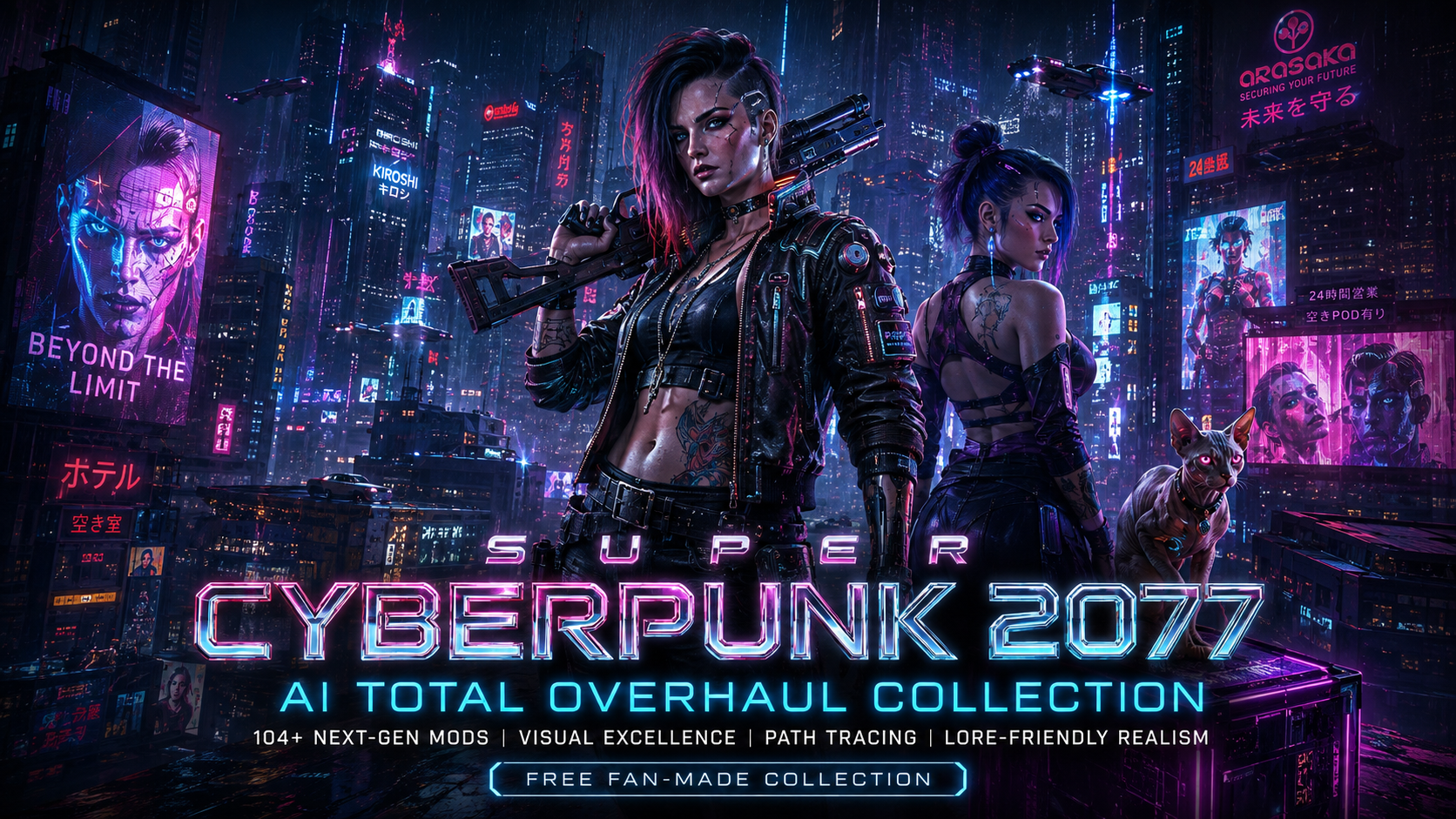
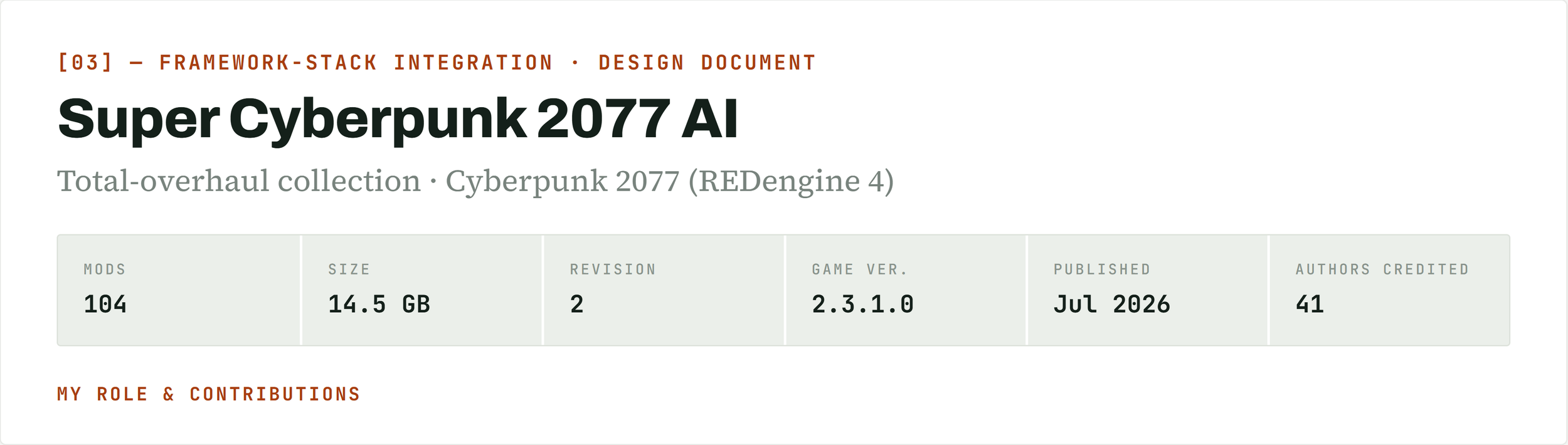
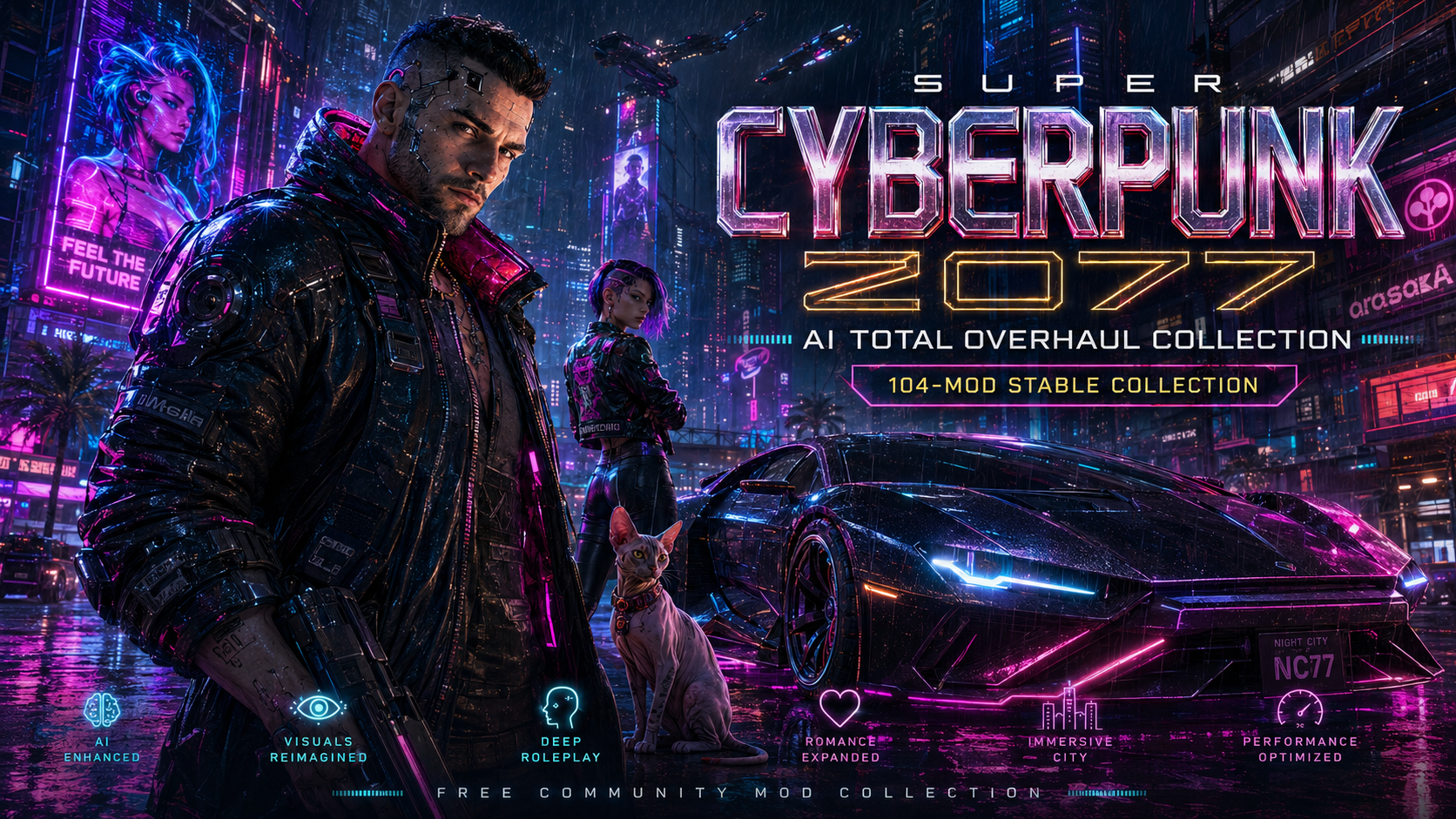
Sole curator, systems integrator, QA lead, and author of the collection's player-conduct design document. Resolved load order and conflicts across a ten-framework dependency stack and validated the full build under path tracing before release.
Vortex · Cyber Engine Tweaks · RED4ext · redscript · ArchiveXL · TweakXL · Codeware · Native Settings UI · Input Loader · path-tracing performance validation on RTX 50-series hardware.
A 104-component build on REDengine's modern framework stack, conflict-checked and tuned for stable frametimes with full path tracing enabled on patch 2.3.1.0. The collection ships with a written design document — Night City Rules of Engagement — defining a principled player-conduct ruleset (protection of non-combatants, de-escalation priority, proportional force) for role-play inside a systemically hostile open world: a constraint-based player-experience design layered over an existing game.
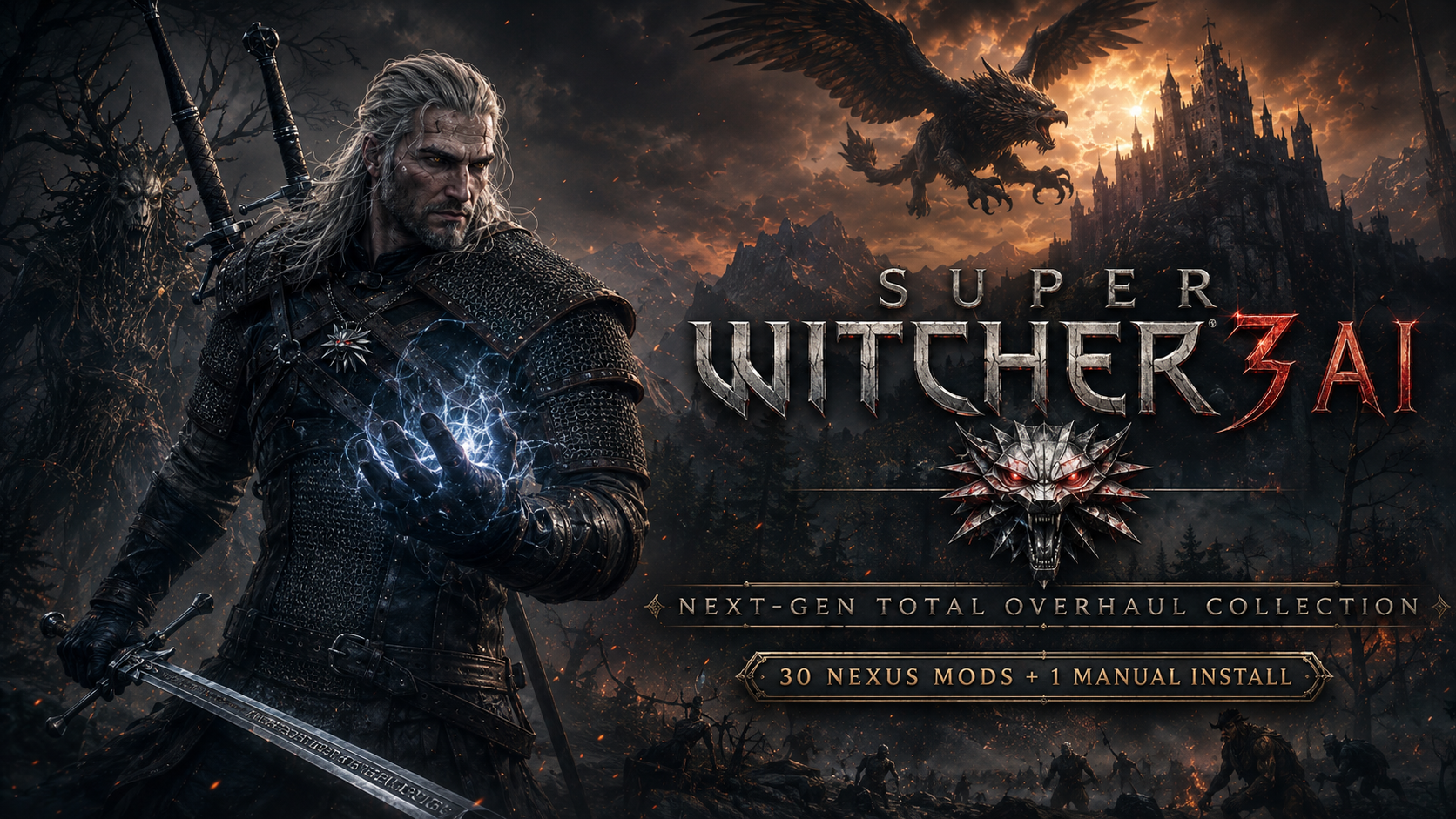
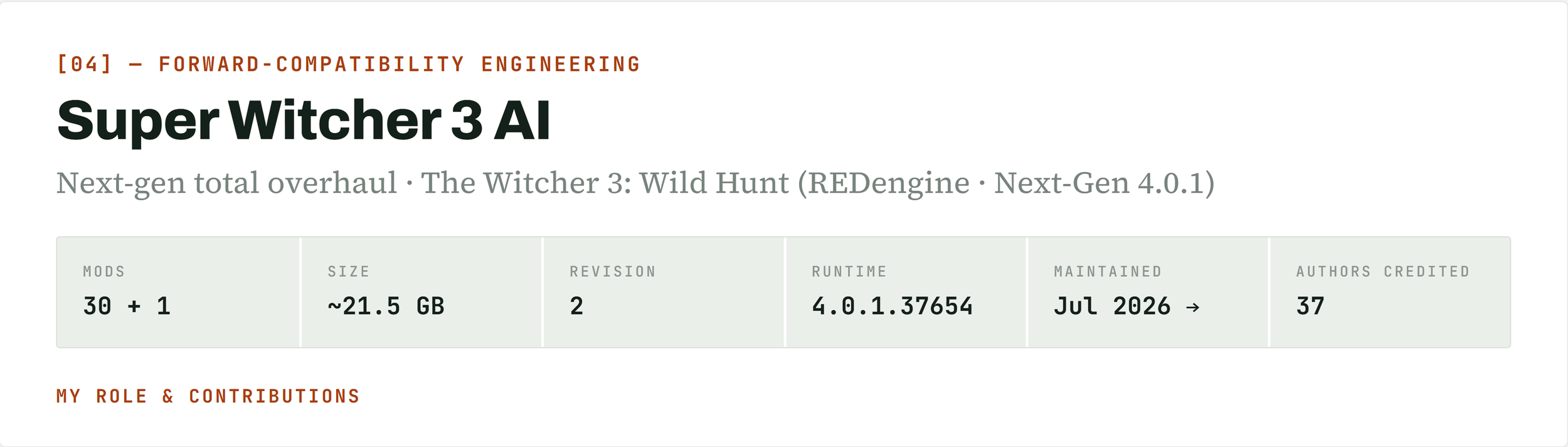
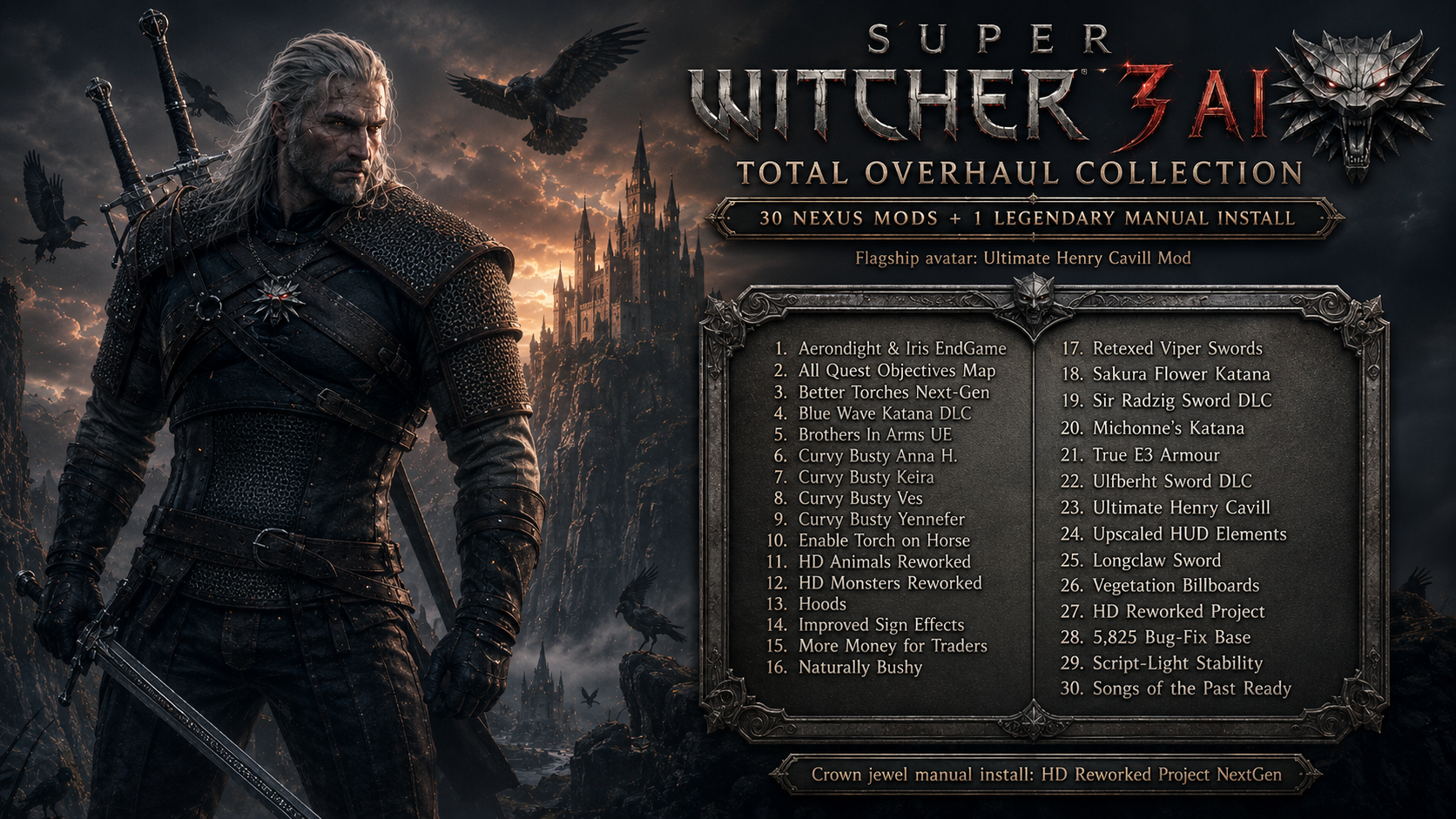
Sole curator, systems integrator, QA lead, release manager, and technical writer. Scoped the build against a live commercial milestone — CD Projekt Red's announced Songs of the Past expansion — selected every component for patch resilience, and shipped two revisions inside the collection's first 48 hours; the 37 component authors are credited on the listing.
Vortex · REDengine (The Witcher 3 Next-Gen 4.0.1 runtime) · Brothers In Arms community patch stack, rebuilt in CDPR's official REDkit · 4K texture and model pipelines · deliberately script-light architecture — no script frameworks, no menu injections · documented manual-install procedure for the ~12 GB HD Reworked Project NextGen component · validation at 4K with full ray tracing on RTX 50-series hardware.
The forward-compatibility case study: 30 one-click components plus one documented manual install, ~21.5 GB deployed, released within two months of CD Projekt Red announcing Songs of the Past — the game's third expansion, due 2027. The engineering constraint is the calendar. The build is deliberately script-light — 5,825 REDkit-built community fixes via Brothers In Arms, 4K textures and models, UI, and nothing an expansion patch is likely to break — so the collection is engineered to survive the update rather than be rebuilt after it. A published three-revision roadmap ties future releases to external milestones: the HD Reworked Project 2026 edition, then the expansion compatibility pass. It treats a mod collection the way a studio treats a live product — versioned against upstream, documented for handoff, and built to be played for years.
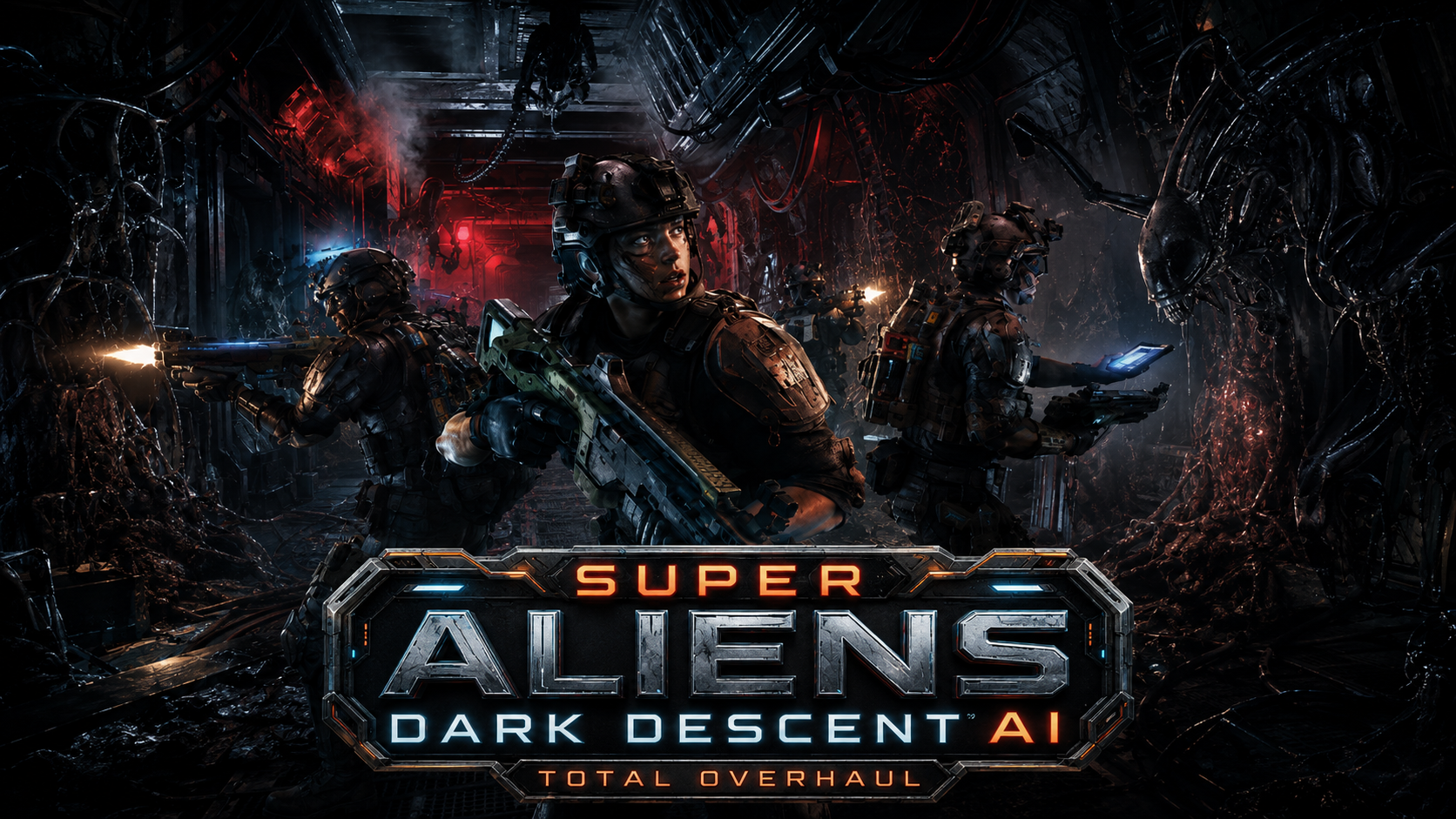
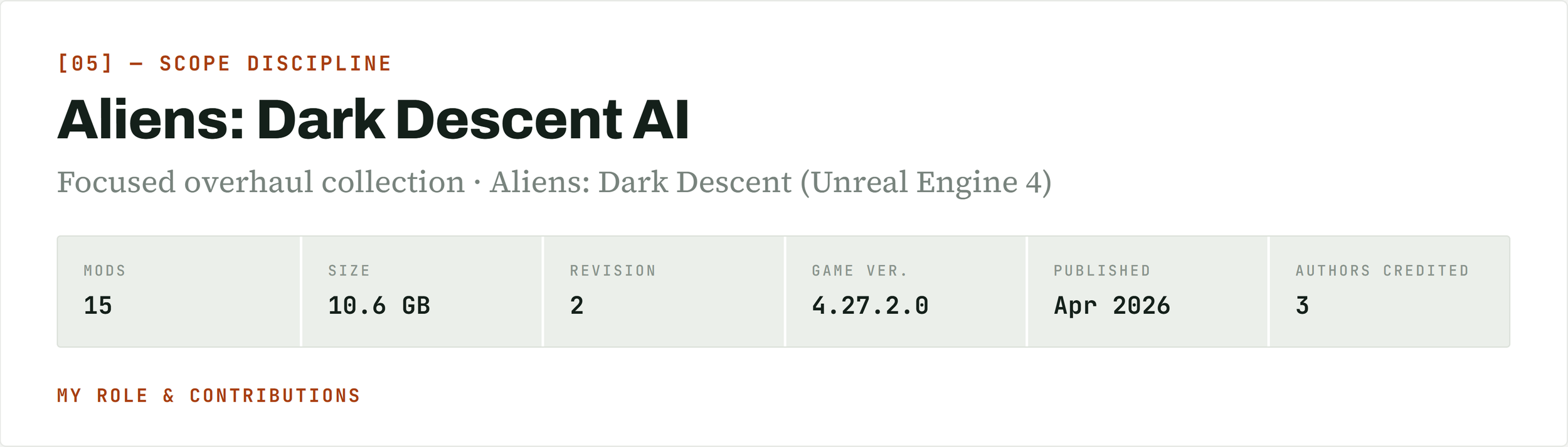
Sole curator and QA lead. Defined a deliberately narrow scope, tested every candidate against it, and cut anything that deviated from the developer's balance and intent.
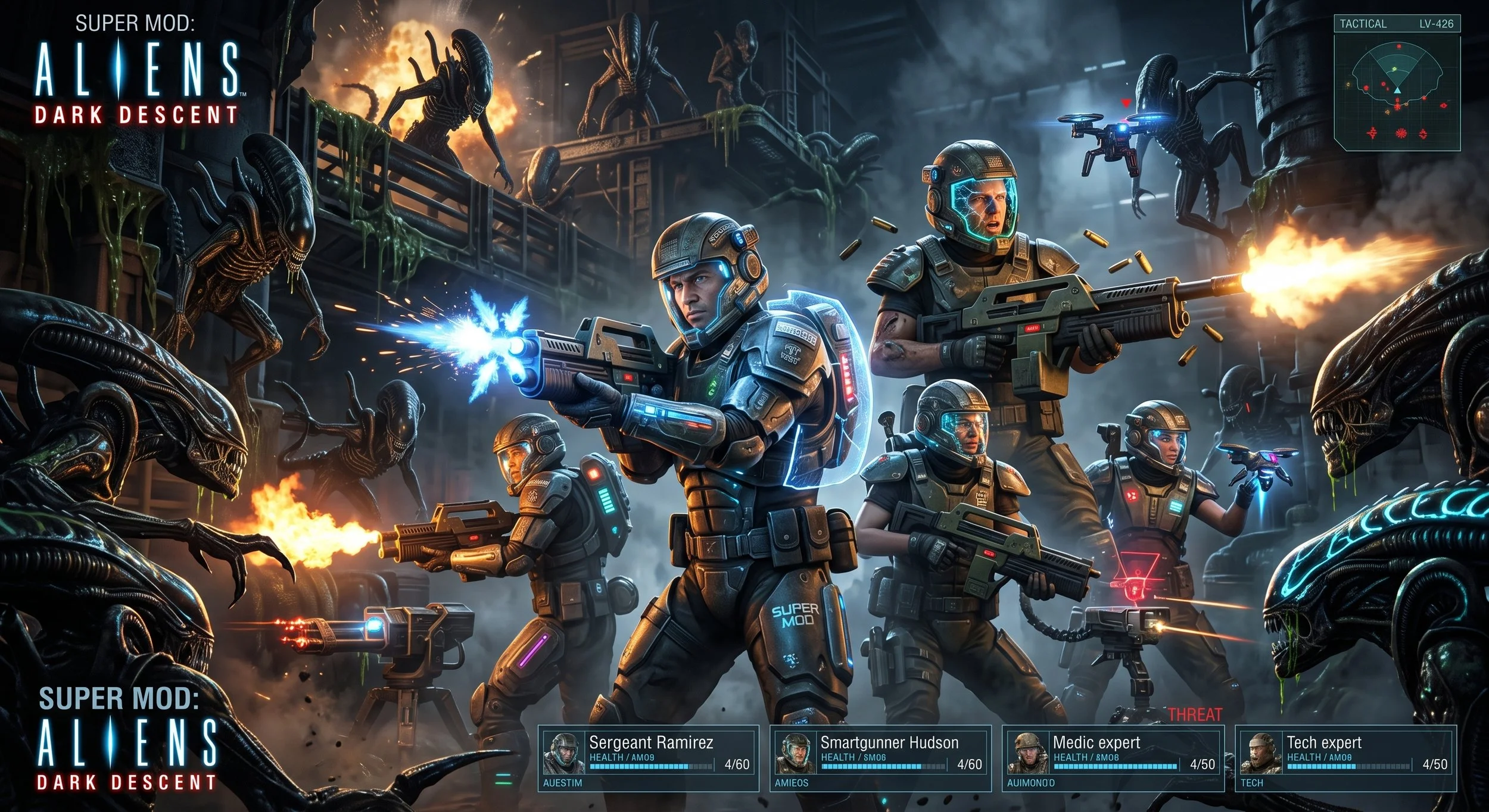
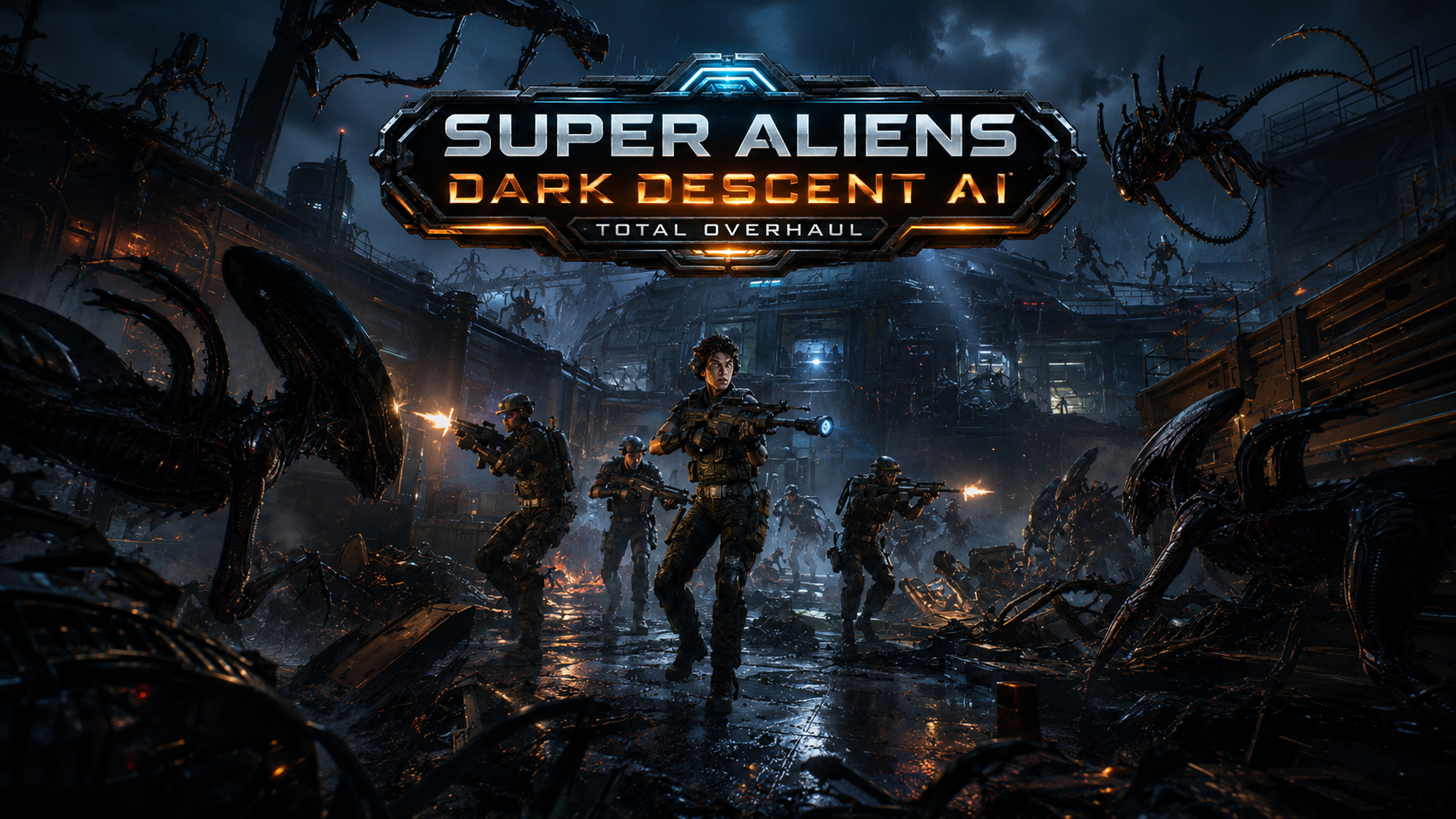
Vortex · Unreal Engine 4 title · 4k UHD textures of Colonial Marines, Weyland-Yutani Commandos, Alien Xenomorphs, UI improvements, and AI cutscene video asset replacements.
The counter-example that proves the discipline: fifteen components, not two hundred mods. Visual fidelity, readability, and quality-of-life only — nothing that alters balance or reinterprets the developer's design. Curation is knowing what to leave out; this release is the portfolio's demonstration that the mod count is an output of the goal, never the goal itself.








Every collection above moved through the same six-stage process. The sequence is the point: each stage gates the next, and nothing ships on hype.

Define the build's goal and constraints, survey candidate components, and evaluate each against engine version, scripting model, and the goal — rejecting on merit, not popularity.

Resolve masters, frameworks, and patch chains into an explicit load order; identify hard incompatibilities before anything is installed.

Reconcile asset and record overlaps; configure per-component settings so systems compose instead of collide.

Extended sessions on target hardware measuring frame pacing, save integrity, and system persistence — VR comfort treated as a hard requirement.

Version the build, publish changelogs and setup guides, and credit every component author.

Monitor bug reports and comments, reproduce issues, and ship corrective revisions that preserve existing saves.

All third-party mods remain the work of their credited authors; complete credits are maintained on each Nexus Mods listing. This page presents integration, curation, QA, documentation, and release work only.
© 2026 Fernando F. S. Rodrigues